MSNAP 2025-2030
An Overview
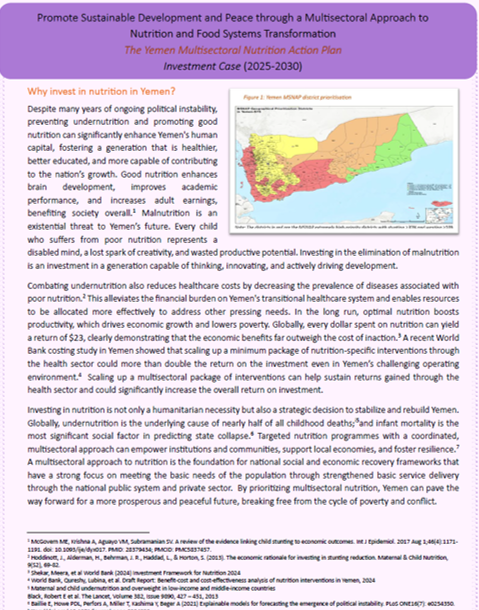
The MSNAP 2025-2030 provides a nationally endorsed roadmap to tackle malnutrition in Yemen through multisectoral efforts which are aligned and coordinated to deliver common results that will improve people’s nutrition and contribute to peace and sustainable development in Yemen. Good nutrition plays a crucial role in preventing young childhood deaths, a key predictor of national stability. It also builds immunity and reduces risk of nutrition-related illnesses. Moreover, optimal nutrition preserves human capital and boosts economic development, while building resilience and social cohesion to withstand shocks and prevent future crises. International evidence shows that every dollar spent on nutrition can yield a return up to $23,[1] making it a smart investment even in the Yemeni context.
Yemen’s MSNAP 2025–2030 marks a strategic shift in how nutrition is tackled through the following;
- Scale up longer-term, locally led programmes across a range of sectors that build resilience, strengthen public institutions and prevent malnutrition alongside life-saving interventions.
- Empower national, local and community-based actors to develop evidence-based policies, coordinate actions, provide services and promote mutual accountability.
- Increase multi-year, predictable and flexible investments in sustainable nutrition relevant programming across sectors.
- Alignment across humanitarian, development, and peacebuilding efforts to transform fragmented efforts into coordinated actions that address the main drivers of malnutrition.
[1] Shekar, Meera, et al World Bank (2024) Investment Framework for Nutrition 2024
Acceleration Programs
The implementation mechanisms of the plan ” Acceleration Programs ” serve as strategic tools to guide interventions effectively, by identifying priority areas based on levels of need and ensuring both geographic and qualitative focus to address the root causes of malnutrition. Programs are designed through gap and needs analysis to align interventions with field realities. Within this framework, acceleration programs are introduced as a strategic instrument to fast‑track nutrition goals by showcasing successful models, stimulating sustainable financing, expanding coverage, and improving the quality of implementation over the long term.
Acceleration programs are divided into two main types:
- Geographic programs, implemented at the sub‑national level to provide multisectoral, evidence‑based support in priority areas.
- Thematic programs, focusing on key nutrition issues such as maternal nutrition policies, the first 1,000 days, national awareness campaigns, and strengthening the nutrition information system.
This methodology enables active participation of all stakeholders—including ministries, humanitarian institutions, and the private sector—in implementing the plan and leading initiatives, guided by clear mechanisms for monitoring, evaluation, accountability, and learning within a framework of shared results.
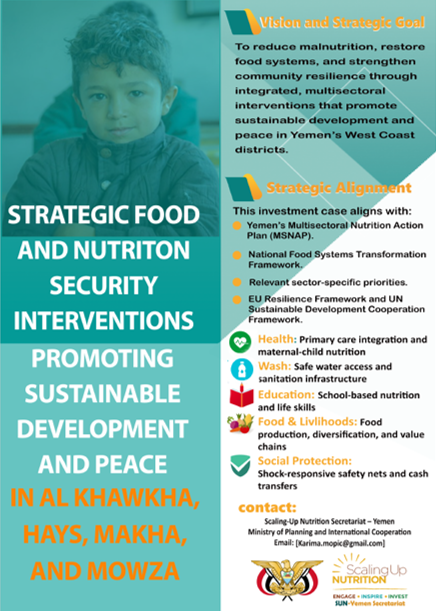
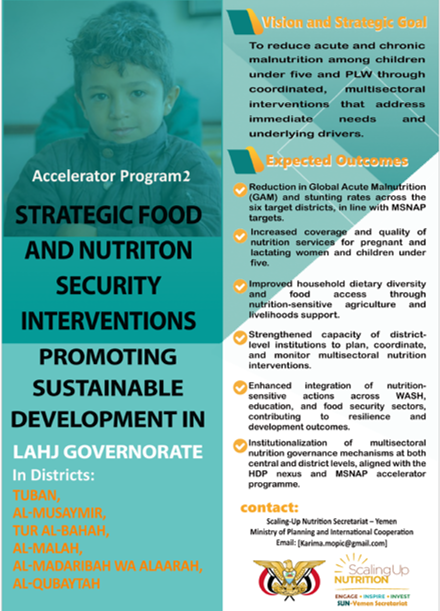
Invest in Nutrition
Investing in nutrition in Yemen is the cornerstone of building human capital and driving development. Proper nutrition nurtures cognitive abilities, improves education and productivity, and reduces poverty, while malnutrition threatens Yemen’s future with disabled minds and wasted potential.
Enhancing nutrition lowers healthcare costs and generates significant economic returns—up to 23 times the investment—while also contributing to poverty reduction, stability, and reconstruction.
Through a multi-sectoral approach, nutrition can strengthen community resilience and pave the way for a healthier, more prosperous, and peaceful future for Yemen.